AI news

OpenBMB presents a systematic study of edge-cloud collaboration for long-horizon agents (EC²-Bench)

OpenBMB@OpenBMB
When should the cloud execute for the edge agent, and when should it just advise? We present a systematic study of edge-cloud collaboration in long-horizon agent execution. Using EC²-Bench, we evaluate four collaboration strategies across 128 executable tasks, jointly measuring task completion, resource cost, and privacy exposure. Here are three key findings: 1️⃣ Small cloud budget, big gains.(cost-efficiency). With Qwen3.5-9B on-device and GLM-5.3 in the cloud, edge-only scores 39.12; the best collaboration reaches 60.46 — about 73% of cloud-only (82.70) — at only $8.73, roughly 15% of cloud-only's $56.42. 2️⃣ Performance converges, privacy doesn't. On Qwen3.7-Plus, best collaboration hits 76.84 vs 82.70 cloud-only; strategy gaps shrink to just 3.67 completion points, yet privacy exposure spans 66.23 percentage points — and the best-performing strategy leaks the most. 3️⃣ The mode flips with edge capability. Weak edges do best with an external router that lets the cloud execute (2B…
Shared postoriginally

Explainer: the 'predictive closure' view in JEPA research

Turing Post (Ksenia Se)@TheTuringPost
JEPA learns what to keep from what it sees, and uses that to predict what comes next. But what about the details it can’t predict? Wouldn’t it be easier for the model to drop them? Look at this example Imagine a traffic light that changes color randomly. Its next color is unpredictable, but its current color helps predict whether a cyclist will stop or move. If we drop the light, the cyclist becomes harder to predict. ▪️ A recent research call this set-level view "predictive closure:" A feature’s value depends on its relationships with the other features the model represents. Keeping the light makes the cyclist easier to predict, but adds an unpredictable color to the model’s targets. Dropping it removes that target, but loses a useful clue. The researchers separate these two costs: 1. Aleatoric uncertainty: what remains uncertain even with the full current observation, like the light’s next random color. 2. Predictive leakage: useful information available in the observation bu…
Shared postoriginally

Research: two full LLM rewrites of their own agent harness raise held-out scores by 2.8 points

elvis@omarsar0
Can LLMs improve their own harness? Self-improving harnesses are a hot topic. And one interesting question is whether LLMs can generate and improve them on their own. They find that two full rewrites of the harness raise held-out scores by only 2.80 points, and the 95% interval crosses zero. Each frontier model writes a complete harness from a fixed coding bootstrap, plays five development games through it, and then rewrites its whole codebase twice. Every version is scored on 20 games that never influence the rewrites. Across 27 lineages, first harnesses range from zero to near-ceiling. The revisions add very little. Gains on the development games overstate the held-out gains, and revisions that cut inference cost often lower the score. Human-steered systems still score higher on the same games, so better designs exist. The models just do not find them reliably on their own yet. arxiv.org/abs/2610.30499 Chat with Paper: academy.dair.ai/papers/can-llms…
Shared postoriginally

Research: coding agents choose skill granularity at runtime with fallback to primitive tool calls

DAIR.AI@dair_ai
Nice work on using skills more effectively for coding agents. (bookmark it) In this work, researchers treat skill granularity as a runtime decision. For each task, the agent can use primitive tool calls, a macro skill, or a macro skill that falls back to primitive steps when it fails. Fixed macro execution is efficient when the skill fits and brittle when it does not. The controller picks the level from task structure, execution state, and earlier macro failures, and a finite-state executor handles the fallback as an explicit transition instead of an informal retry. In a 12-task routing study, a learned router reaches 100% success where a hand-written heuristic fails. With macro-to-micro fallback, the agent recovers controlled macro failures that fixed granularity leaves unresolved. arxiv.org/abs/2610.31461 Chat with Paper: academy.dair.ai/papers/adaptive…
Shared postoriginally

vLLM: DeepSeek-V4.1-Flash decode throughput within 6% of DeepSeek's own DeepInfer engine; 954K tokens/s per GPU on a GB300 NVL72

vLLM's Oct 23 blog: on GB200 under DeepSeek's decode setup, decode throughput is within 6% of DeepInfer's published results at batch sizes 8-256; DeepInfer's numbers were read from its charts, not run side by side. On a GB300 NVL72 with P/D disaggregation and Wide-EP, vLLM hits 954K tokens/s per GPU on SemiAnalysis AgentX at P90 196 tokens/s per user, about $38.96 per GPU-hour at off-peak prices.

Why it matters: vLLM says it now matches DeepSeek's own DeepInfer engine on DeepSeek-V4.1-Flash decode.

Open sourceoriginally

LM Studio

Find, download and run local LLMs with a desktop GUI

Local AI & modelsv0.4.28

Newly listedNew

AI Agents Struggle to Stop. Approvals That Never Expire May Be Why.

Replaying the Mythos 5 incident, Anthropic found that once an attack was well underway, the model almost never backed off on its own. Its hypothesis: the model read its own handoff notes as permission. The brakes belong where the agent can't reach.

Long readEditorial11 min read

Moonshot launches Kimi K3.1 Pro and deliberately weakens its hacking ability

Moonshot AI released Kimi K3.1 Pro, a post-trained K3 with a 1M-token context, on Kimi.ai, Kimi Work, Kimi Code and the API, with open weights promised by Nov. 4. It reports 65.7% on Terminal-Bench 4.0 and an internal hallucination rate cut from 23.4% to 8.3%. It removed offensive-security training data: on xdev-bench-hard the release scores 81.0% versus 90.5% unfiltered.

Why it matters: Moonshot is openly trading away some capability to reduce offensive cyber skills, addressing a core worry about releasing open weights. All benchmark numbers are self-reported and not yet independently verified.

Modelsoriginally

Tencent's WorkBuddy adds Moonshot's Kimi K3.1 Pro, including a faster Highspeed variant

Tencent's workplace agent WorkBuddy said on Oct 24 it now offers Moonshot AI's new Kimi-K3.1-Pro with a 1M-token context window, plus a Highspeed variant Tencent says matches its intelligence at roughly 2-3x the output speed. Citing tight capacity, access goes first to enterprise flagship and individual paid subscribers. The speed figures are Tencent's own claim.

Why it matters: Kimi K3.1 Pro landing in a Tencent product days after launch shows large platforms such as Tencent will ship rivals' models in their own apps, while the tiered rollout points to the compute cost of long-context inference.

Product updatesoriginally

Amazon's Jassy says AWS capacity is sold out for 2026 and largely spoken for in 2027

Amazon CEO Andy Jassy said on an a16z podcast that AWS capacity is sold out for this year, largely committed for 2027 and a good chunk of 2028 is already sold, while some capacity is held back for on-demand EC2 and Bedrock. Amazon expects roughly $220 billion in capital spending this year and reports third-quarter results on Oct. 29.

Why it matters: With investors questioning AI spending, the largest cloud provider is signalling demand well ahead of supply, which will frame next week's big-tech earnings and the capex debate.

Funding & companiesoriginally

WeCom says a hacked third-party add-on made business accounts send porn spam; affected accounts forced offline

On Oct. 24, WeCom accounts tied to several brands were seen sending suspected porn-spam links to customers. The WeCom security team said a third-party add-on service had been compromised, hitting accounts that used it. It forced those accounts offline, blocked the links, and said it will keep removing multi-login and bulk-control tools and penalize users.

Why it matters: Many businesses plug unofficial automation tools into WeCom; once one is breached, attackers can message customers under trusted brand accounts, a reminder to audit third-party add-ons that touch account and customer data.

Product updatesoriginally

Firecrawl Alexandria adds fantasy basketball data

Firecrawl says fantasy basketball data is now live in Alexandria, giving ChatGPT or Claude projections, expert rankings, injury updates and news for every NBA player via the Firecrawl plugin.

Why it matters: Firecrawl's Alexandria catalog adds NBA fantasy basketball data, so ChatGPT or Claude can pull player projections, rankings, injuries and news via the Firecrawl plugin.

Product updatesoriginally

Bun publishes three security advisories, all fixed in Bun 1.4.4

Bun disclosed three security advisories affecting Bun 1.4.3 and earlier: compromised eMudhra certificates, a brotli decoder bug known as HTTP2Shell, and the HTTP/3 "Header Accordions" attack. All three are fixed in Bun 1.4.4. The team asks users to run `bun upgrade` and to rebuild anything made with `bun build --compile`.

Why it matters: Bun 1.4.3 and earlier have three security issues (certificates, a brotli out-of-bounds write, an HTTP/3 attack); 1.4.4 fixes them, so users should upgrade and rebuild bun build --compile output.

Product updatesoriginally

Ollama adds NVIDIA's Nemotron 3.5 Bolt E4B for local use

The Ollama library now carries nemotron-3.5-bolt:e4b, a 7.2–7.9 GB download with a 128K context window that takes text and images and supports tool calls. NVIDIA post-trained it from Gemma 4 E4B (8B parameters, 4B effective) for local assistants; run it with `ollama run nemotron-3.5-bolt:e4b`. The "4GB" in Ollama's post is part of NVIDIA's model name, not the download size.

Why it matters: NVIDIA's 4GB small open model Nemotron 3.5 Bolt E4B now runs locally on Ollama, aimed at local assistants, conversational characters and robots that use tools.

Modelsoriginally

Paperclip v2026.1023.0

Paperclip v2026.1023.0 lets a task or project be marked private and shared with named people and agents, so no one else can open it, find it in search, read its run transcripts or reach it through a plugin. Agents can run through your own model gateway, including OpenRouter, Amazon Bedrock, Google Gemini and endpoints compatible with OpenAI or Anthropic APIs, and Costs becomes an exact ledger that also lists monthly subscription fees. The Operator role preset grows from one grant to fourteen, including agent creation and configuration, so admins should review member roles. GitHub review bots move behind an experimental setting that is off by default, while existing bots keep running.

Product updatePaperclipGitHub Releases

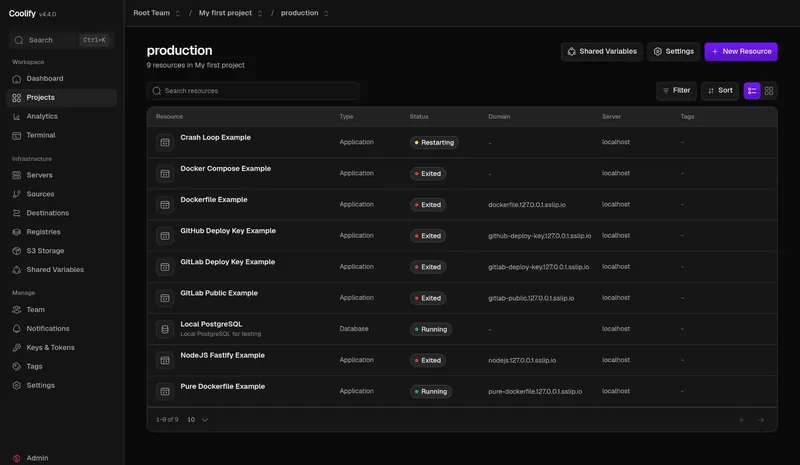
Coolify v4.5.0

Coolify v4.5.0 can deploy private Gitea repositories through Gitea App sources, introduces beta server patching with automatic security updates per server, and adds a fleet Metrics page with server and container tables and trend charts. Passkey sign-in, a file browser for applications, services and databases, and an automatic backup of the Coolify database before each update also arrive. Plaintext secrets are now encrypted at rest, while breaking changes require the deploy ability for API tokens that run scheduled tasks and similar operations and remove the POST /api/v1/enable endpoint.

Product updateCoolifyGitHub Releases

Hindsight v1.1.0

Hindsight v1.1.0 introduces a single decision-model setup with per-operation overrides, adding Cloudflare Clef and the OpenAI Decisions API as providers, and recall ranks with that model when one is configured. An LLM request extension lets the server choose the model and credentials for each call. Document search covers document text and shows which fields matched. Webhook events gain delivery IDs, and fixes include the Windows export poll overrunning its timeout and unknown tags_match values being widened to any.

Product updateHindsightGitHub Releases

Impeccable v4.7.0

Impeccable skill v4.7.0 can critique and audit Electron, NW.js, CEF or WebView2 apps started with a debugging port, scanning the open window without changing it. Two new typography checks arrive: straggler flags a paragraph ending on a single word, and unbalanced-heading flags a heading whose last line is a stub. The skill description loaded into every session is 30% shorter and now recognises requests to write a DESIGN.md. Decision and review pages follow the OS dark mode, and in monorepos only workspaces that render a UI are offered as targets.

Product updateImpeccableGitHub Releases

Easydict v2.25.0

Easydict 2.25.0 adds an Anki Connect integration with its own settings sheet. The DeepL client version has been updated to restore translation compatibility, and DeepL gains Hebrew and Thai. Gemini has moved to the OpenAI format. Query window resizing and text rendering are now more stable.

Product updateEasydictGitHub Releases

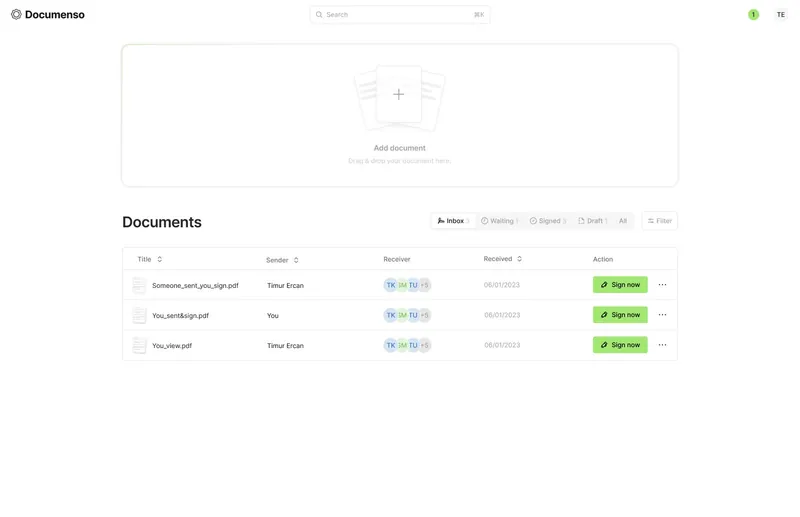
Documenso v2.21.0

Documenso v2.21.0 disables accounts when they are reported and shows a warning for new accounts. Multi-signer completion in v1 now works when optional fields are left empty.

Product updateDocumensoGitHub Releases

shadcn/ui v0.3.0

Version 0.3.0 of @shadcn/helpers adds a { preliminary: true } option to the tool handle's output() for streaming preliminary tool output.

Product updateshadcn/uiGitHub Releases