Introducing PageIndex Flash
PageIndex Flash builds a hierarchical tree index by reading a PDF's own layout, rather than asking a vision model to infer the whole outline from scratch.

 PageIndexOfficial blog
PageIndex Flash builds a hierarchical tree index by reading a PDF's own layout, rather than asking a vision model to infer the whole outline from scratch.
PageIndexOfficial blogmarimo automatically detects obstore and fsspec connections in your notebook and surfaces them in the Files panel.
 marimoOfficial blog
Browser agent benchmarks are saturating. Task sets that separated models a year ago now return pass rates above 90 percent.
 Browser UseOfficial blog
Rapid-MLX v0.13.0 runs supported Qwen3-Next checkpoints larger than available memory by streaming from disk, and serves Nemotron-Labs-Diffusion 3B as a standard text model. Hybrid models reuse compatible prefix caches, which the project says cuts verified repeat-turn prefill from tens of seconds to under a second. The desktop app adds a photo flow and separates Speech to Text from Text to Speech, so ordinary dictation no longer evicts the active chat model. First setup recommends models based on live memory, and switching models during an active request asks for confirmation first.
 Rapid-MLXGitHub Releases 1 more update
While connected, you can choose to use any model within Ollama, both local and on Ollama’s cloud. Turn Claude off in Ollama to restore to your previous setup.
 OllamaOfficial blog
Paperclip v2026.824.0 promotes chat-style tasks from experiment to default, so the task detail page is a conversation view for everyone, with a Classic Task Interface preference that restores the old page without chat-only features. Managed runtime previews are reachable over Tailscale HTTPS, and users can sign in to Claude and Codex inside the product. Sandbox session-output streaming is now decided by provider capabilities, and three operator flags are removed. Large company imports survive dropped connections.
 PaperclipGitHub Releases
Opening a Browser Use v4 session now takes a single request, and the page no longer jumps while loading. A billing bug that priced BYOK cache reads at the full input rate is fixed, so BYOK now costs the same as the managed path. Shared session transcripts now stream in pages instead of blocking on very large transcripts. A session tab left in the background now recovers automatically when you return to it.
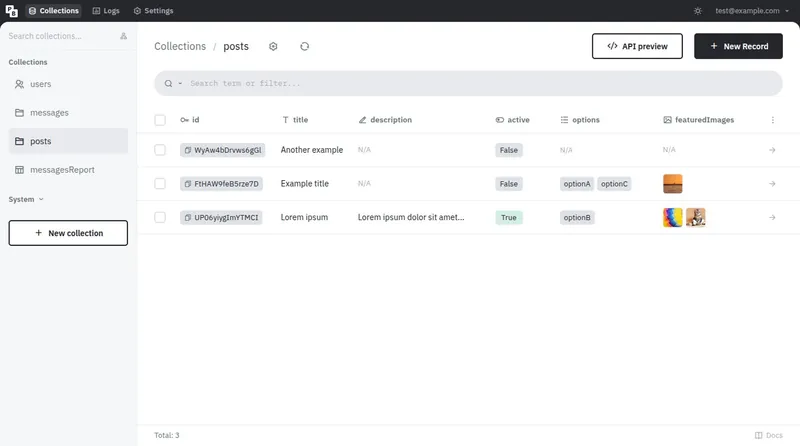
Browser UseProduct release notesPocketBase v0.40.0 adds a DELETE /api/logs endpoint with a matching UI control that removes all logs without changing the retention setting, and a log option caps the stored Log.Data size at about 16KB by default. Backups no longer hold a transaction lock on the database while they are generated. Console command errors and recovered panics now propagate to app.Start(), so the program can exit with a non-zero code, which may affect scripts that chain commands with &&. The minimum Go version rises to 1.27.0 with a move to encoding/json/v2, and the author recommends testing locally before updating production.
 PocketBaseGitHub Releases
Easydict 2.22.0 renders AI translation results with their formatting, and adds a global shortcut to toggle selection translation plus an option to translate as you type. The interface is now available in Japanese, Spanish and Catalan. Services can be added to or removed from the list in settings, and exported history and favorites include the translations.
 EasydictGitHub Releases
Ollama v0.33.0 lets developers configure Claude Desktop to use Ollama as a third-party gateway provider. Prefill caching gets several fixes, and a cancelled prefill now keeps the restore points it crossed so retries resume where they stopped. The release fixes a hang caused by agent clients that cancel long prefills. Claude Code's token-countdown system message is disabled so it no longer breaks the KV cache on every request.
OllamaGitHub ReleasesThe Midjourney sidebar on alpha.midjourney.com can now organize projects into a collapsible tree of groups, renamed with a double-click. Upscale, Zoom and Vary are back, and Vary now follows your settings instead of quietly running in HD. Settings no longer reset on their own, and Relax no longer flips back to Fast. Lag when typing prompts, moving settings sliders and scrolling deep into the gallery has been fixed.
 MidjourneyProduct release notes
Games have always been a mirror for intelligence.
 Google DeepMindOfficial blog
Bun v1.4.0 is the first release built from a Rust rewrite of the former Zig codebase, and it brings in 1,517 more tests taken from Node's own suite, the largest compatibility gain since 1.0. More than 2,900 issues are closed, idle CPU drops fivefold, memory falls by as much as 35%, and Linux startup is 50% quicker. Since 1.3.0 Bun has gradually picked up Bun.Image, Bun.WebView, Bun.markdown, Bun.cron(), Bun.Terminal and parallel modes for bun run and bun test, while bun audit fix, bun dedupe, bun prune, bun pm diff and a built-in React Compiler debut in this version.
 BunGitHub Releases
Dub can now pay partners a fixed amount on a regular cadence, whether daily, weekly, biweekly, monthly, quarterly or yearly. These rewards are meant for retainer-style agreements where a set fee is negotiated in exchange for ongoing promotion, content or sponsorship placements.
 DubProduct release notes
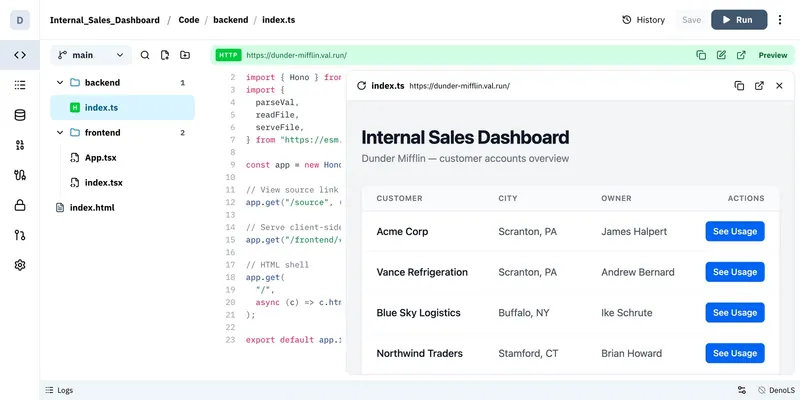
The new MCP spec ( 2026-07-28 ) includes fundamental changes to the protocol.
 Val TownOfficial blog
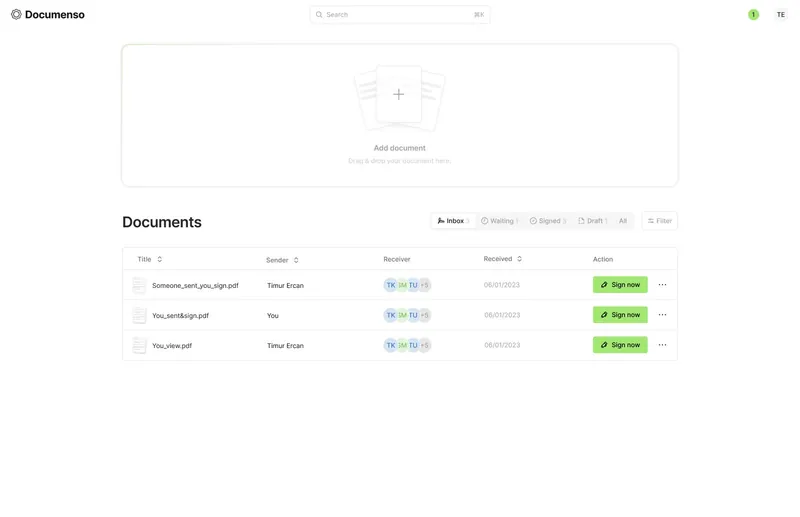
Documenso v2.17.0 can download documents in bulk and adds filters for rejected and expired recipients; document status tabs become filter pills and the settings pages are unified. The global API rate limit rises to 1000 requests per minute, the app moves to React 19, and it can be served under a sub-path with NEXT_PUBLIC_BASE_PATH.
 DocumensoGitHub Releases 1 more update
Custom domains hosted on Vercel or Cloudflare can now connect to Dub in one click, with no manual DNS records. When a domain cannot use Auto-configure or someone else manages its DNS, the exact records needed can be forwarded straight to that person's inbox.
DubProduct release notesLatitude typescript-sdk 9.10.0 adds client.signals.submitFeedback for recording a one-time verdict on whether a flagger-detected signal is a real problem, with an optional reason and optional archiving in the same call, and the verdict cannot be changed afterwards. The client.signals.get method now returns the submitted feedback, or null when there is none.
 LatitudeGitHub Releases
Paperclip v2026.817.0 is the first stable build released through the canary, nightly, beta and stable channels, carrying 311 commits since the previous stable 2026.722.0. It adds a propose/decide workflow in which agents offer multi-option actions and people decide from an auditable surface, with decision queues and a Decisions desk; the release also brings full company import and export, a managed CLI install lifecycle and a chat-style task view. The Docker :latest tag now points to stable releases, so anyone tracking every merge should switch to :canary. Experimental Cloud Sync is removed, leaving company import and export as the only supported way to move data.
PaperclipGitHub ReleasesDub bounties and email campaigns can now be scoped by partner tags. Bounties can use a dynamic start date, so the bounty period begins when a partner joins the program. Transactional email campaigns can combine multiple conditions, for example enrollment of at least 30 days together with zero leads.
DubProduct release notesBrowser Use V4 agents can now be scheduled, with pause and resume controls, alongside legacy jobs in Scheduled Jobs. A new Agency skill lets agents research and prepare work proactively, asking for approval only before an external action such as sending or publishing. The bu-2-0-mini-preview model is now available on the V2 API and in the model picker. MiniMax M3 has been removed from the model picker.
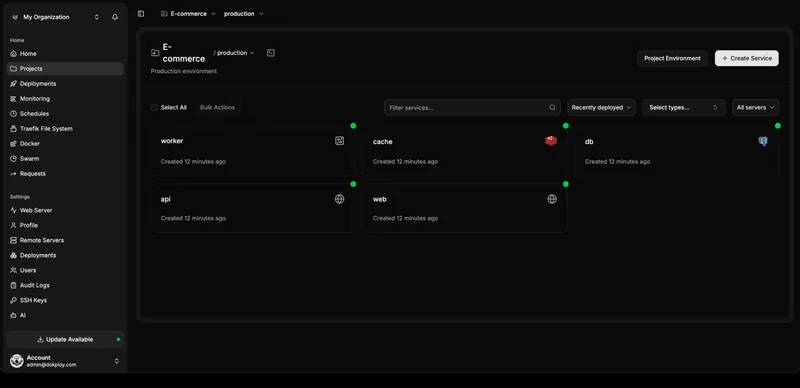
Browser UseProduct release notesDokploy v0.30.0 adds a management UI for Docker networks, where bridge or overlay networks can be created, inspected and deleted per server, and each service can attach or detach networks on its own, which is why Isolated Deployment is now deprecated. With Cloudflare or AWS Route53 connected, adding a domain creates its DNS record automatically. Environment variables can be resolved at deploy time from external secret managers such as HashiCorp Vault, Infisical and AWS Secrets Manager without storing the values in Dokploy. The single global build queue becomes one queue per server, and sign-in supports passkeys.
 DokployGitHub Releases