How we localize Buttondown
JSON is portable and legible, and those two properties are increasingly underrated these days!

 ButtondownOfficial blog
JSON is portable and legible, and those two properties are increasingly underrated these days!
ButtondownOfficial blogLatitude python-sdk 9.7.0 adds settings.redaction to client.projects.update and the project response, redacting personal information on the server before spans are stored. In enforce mode it scans span content for the configured categories and replaces matches with a labelled placeholder, optionally extending the scan to metadata and tags. The setting applies only to spans ingested after the change and cannot be undone. The client.projects.update method now patches settings, so omitted fields keep their stored values.
 LatitudeGitHub Releases
From the official blog (rapidmlx.com), published . View original
 Rapid-MLXOfficial blog
Moving to marimo on molab changed everything.
 marimoOfficial blog
Impeccable cli v3.4.0 adds a kicker-above-heading rule that flags the first eyebrow label above a heading, while breadcrumbs, datelines and form labels stay exempt. A new radial-spotlight-glow rule flags the soft coloured glow fading out behind content. Pseudo-element stripe patterns are now caught in standalone CSS files and style blocks. Scans skip hidden and vendored directories, and global OpenCode skill installs go to the config directory OpenCode actually reads.
 ImpeccableGitHub Releases
From the official blog (rapidmlx.com), published . View original
Rapid-MLXOfficial blogExample-based tests show that an endpoint handles the scenarios we know to test. Schemathesis probes the scenarios we did not think to write down.
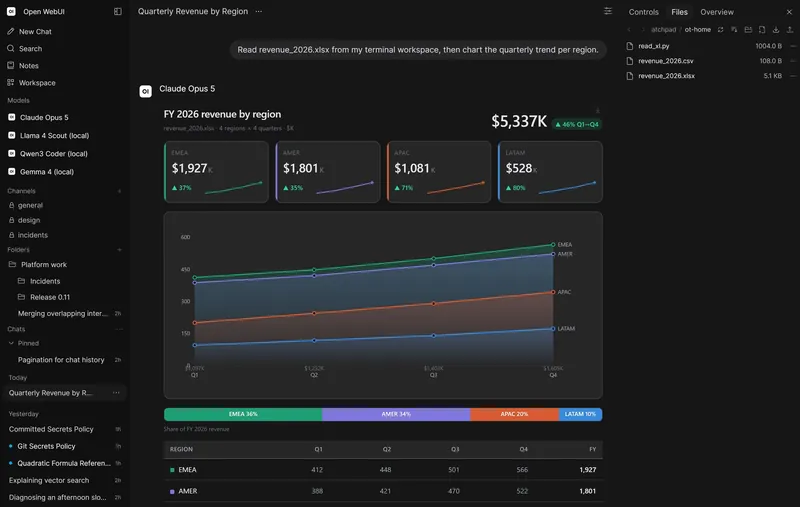
ButtondownOfficial blogOpen WebUI v0.11.0 rebuilds the whole interface, from the chat view to the admin panel, with a narrower conversation column, lighter type and reorganised menus and settings. Administrators can switch on sub-agents, letting a model pass parts of a task to background helpers whose results come back into the chat. Folders get pages of their own, the assistant can set timers and send you notifications, and any response can be forked into a new chat. Because the database schema changes, every instance in a multi-worker or multi-server setup has to be upgraded at once.
 Open WebUIGitHub Releases
Using marimo, we embedded a reactive, self-service sandbox directly into our documentation.
marimoOfficial blogMidjourney has launched its V8.2 image model, an update aimed at aesthetics, image quality and personalization, and the company says low-quality results should become rarer. Personalization should understand each user's taste better, especially for people who have rated many images. Building a V8.2 personalization profile now uses a larger pool of images.
 MidjourneyProduct release notes
Prefix-cache reuse: 13.1s → 0.51s TTFT (25.6×).
Rapid-MLXOfficial blogNext Monday, July 20, 2026, we’re kicking off marimo’s first-ever launch week.
marimoOfficial blogCo–Star itself is a wonderful project, and it will remain entirely under Banu’s control and direction.
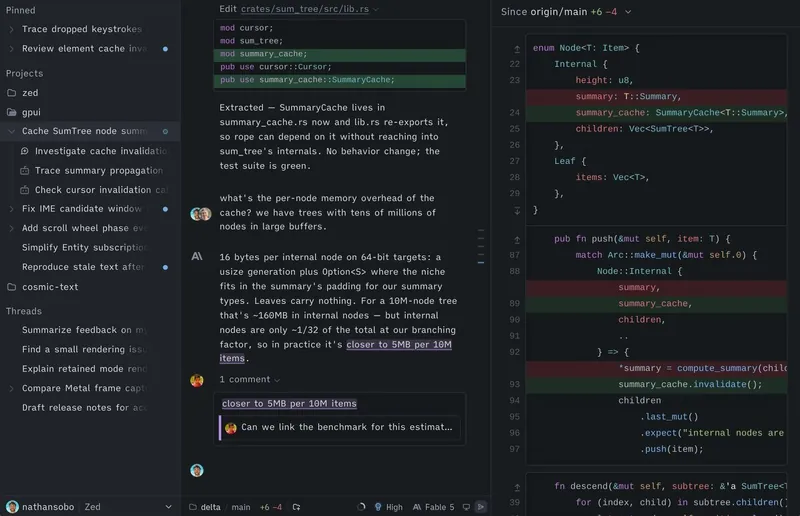
MidjourneyOfficial blogZed v1.12.0 adds a Staging grouping to the Git Panel with separate Staged and Unstaged sections, prompts for GPG passphrases inside Zed to unlock commit-signing keys, and puts Restore buttons in the unstaged diff view. File Finder and Text Finder support multi-select. ACP elicitations are enabled by default, so ACP agents can collect structured user input. Find all references, go to definition and go to implementation open filterable result pickers with previews, and Markdown files accept pasted clipboard images.
 ZedGitHub Releases
Paperclip v2026.722.0 lets agents fetch the secrets they have been granted on demand through a run-bound API, with every read written to the security audit trail and the operator activity log. The embedded ACPX engine no longer wraps local agent commands in a Bash script, so Claude, Codex, Gemini and custom ACP adapters start natively on Windows. User-named PAPERCLIP_* environment bindings now reach agents instead of being stripped by the heartbeat, and only PAPERCLIP_API_KEY is still rejected.
 PaperclipGitHub Releases
Latitude typescript-telemetry 4.0.0 makes a breaking change: instrumentations now takes an array of instances created by the @latitude-data/telemetry/instrumentations/* factories instead of an object keyed by integration name. Provider instrumentations still ship with the package but sit behind subpath exports, so unused integrations and their dependencies stay out of consumer bundles.
LatitudeGitHub Releases 2 more updatesImpeccable cli v3.3.0 adds 12 deterministic anti-pattern rules, covering radial glow halos, marquee scrollers, blinking terminal cursors and decorative dot grids among others, for 58 in total. The location of each product's PRODUCT.md and DESIGN.md is now declared in .impeccable/config.json. The impeccable ignores setting can waive a rule for a single file with a wildcard value. Nested apps in repositories that are not monorepos now respect --target.
ImpeccableGitHub Releases 1 more updateLatitude cli 7.5.0 adds latitude signals resolve, unresolve, ignore and unignore commands. Resolving archives a signal while its evaluations keep watching for regressions, and ignoring archives it, stops monitoring and mutes notifications. Signal responses gain resolvedAt, ignoredAt and regressedAt fields, and analytics include resolved and ignored counts. Muting a signal now only toggles notifications, and incidents keep opening while muted.
LatitudeGitHub ReleasesFrom the official blog (rapidmlx.com), published . View original
Rapid-MLXOfficial blogFrom the official blog (rapidmlx.com), published . View original
Rapid-MLXOfficial blogFrom the official blog (rapidmlx.com), published . View original
Rapid-MLXOfficial blogFrom the official blog (rapidmlx.com), published . View original
Rapid-MLXOfficial blogThe host integration owns source parsing and output placement.
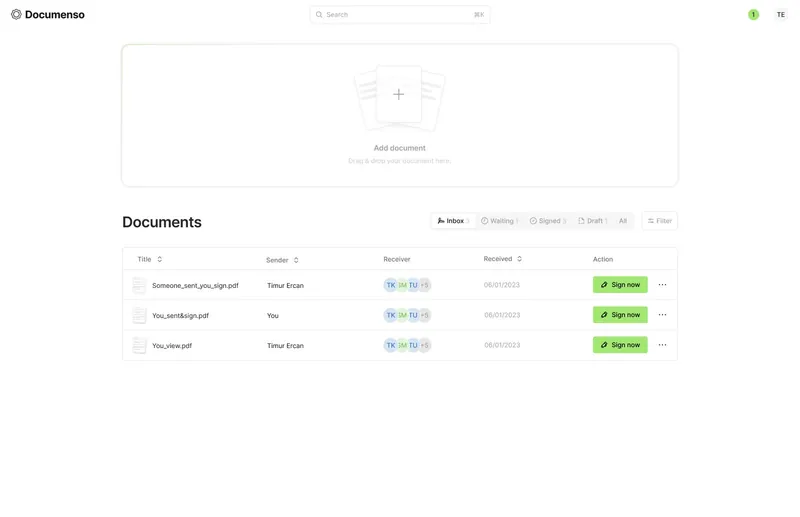
marimoOfficial blogDocumenso v2.15.0 lets you select several fields at once, and a dropped field is selected automatically. Granular flags can disable individual sign-in methods, OIDC can redirect automatically, and email and password fields are validated as you type. Permission and validation checks are stricter, and names may no longer contain invisible or control characters or URLs.
 DocumensoGitHub Releases
VoiceStudio v0.4.0 adds a Cast panel to the audiobook tab that maps each [voice:NAME] in a script to a voice profile, where multi-voice text previously fell back to one voice. The Stop button now cancels a running generation and shows per-chapter progress, with finished chapters cached so a new run can resume. First run needs only the TTS model at about 2.4 GB instead of about 5 GB. In server mode, clients on a trusted network can no longer reach admin routes without the API key.
 VoiceStudioGitHub Releases
Paperclip v2026.720.0 adds Skill Studio, a three-pane skill editor with sandboxed test runs, and skills can live in nested folders or be imported from a project. A new attention queue and Decisions page gather everything that needs human input, and search gains filters, sorting and operators. Run recovery is routed by failure cause and waits for provider quota resets before retrying. ACP sessions can run in sandbox targets, and the sandbox time limit rises to four hours.
PaperclipGitHub ReleasesThe Browser Use Browser Harness (v4) API now lets callers control session recording instead of keeping it always on. The browserSettings.record setting is off by default for API calls and on by default for UI sessions, an explicit value overrides the client default, and later runs on that browser inherit it. OAuth apps using the terminal flow gain the v3:browsers:read scope for reading existing browsers.
 Browser UseProduct release notes
Agent instructions are surfaced to any agent—not just Townie—via our MCP server.
 Val TownOfficial blog
The Browser Use Browser Harness (v4) agent API is now part of the public API surface, listed in the OpenAPI spec, docs and SDK codegen. GET /runs, GET /sessions and the run event log now use cursor-based pagination instead of offset paging. Per-run spend caps can now be set with maxCostUsd instead of a fixed $5 default. The pay-as-you-go minimum top-up drops from $25 to $5.
Browser UseProduct release notesReact Aria is now a first-class component base in shadcn/ui.
 shadcn/uiOfficial blog
AFFiNE v0.27.0 adds an experimental AI BYOK feature and a Calendar View for Database blocks, and the native client gains importers for OneNote, Obsidian, Bear and Notion. The backend can now clean up blobs that clients have deleted. Compatibility breaks in both directions, with 0.27 clients requiring a 0.27 or newer server and 0.27 servers accepting only clients from 0.26 on. Servers no longer prefer environment variables for configuration and some are gone, so settings need to move to config.json.
 AFFiNEGitHub Releases
OpenCode v1.18.0 completes the Desktop v2 migration, including upgrade handling for the new layout and first-launch onboarding, and a setting lets users switch between layouts during the transition. The release fixes wrong file-view backgrounds in the v2 layout and terminal tabs stealing focus when they mount. Permission auto-accept state is now kept separately for each server.
 OpenCodeGitHub Releases
From Ollama v0.32.0, running ollama launches an interactive agent that helps with coding and delegating work. The Codex App integration is renamed ChatGPT and starts with ollama launch chatgpt. The ollama launch menu now lists only the most popular integrations. Older models such as CodeLlama and Llama 3.x trigger a deprecation warning before launch.
 OllamaGitHub Releases
Beyond the built-in reward conditions, Dub can now base partner rewards on any metadata attached to tracking events, such as different tiers for annual and monthly plans. Events sent to the /track/lead and /track/sale endpoints can carry the metadata prop. With the Stripe integration, sale metadata is pulled automatically from checkout.session metadata or invoice metadata.
 DubProduct release notes
Pake V3.14.0 adds a --hide-window-decorations option that packs a frameless window on Windows and Linux with a top drag region and F11 for native fullscreen. Notion joins the popular app list with official high-resolution icons. The release fixes corrupted saved zoom values, which now fall back to 100%.
 PakeGitHub Releases